
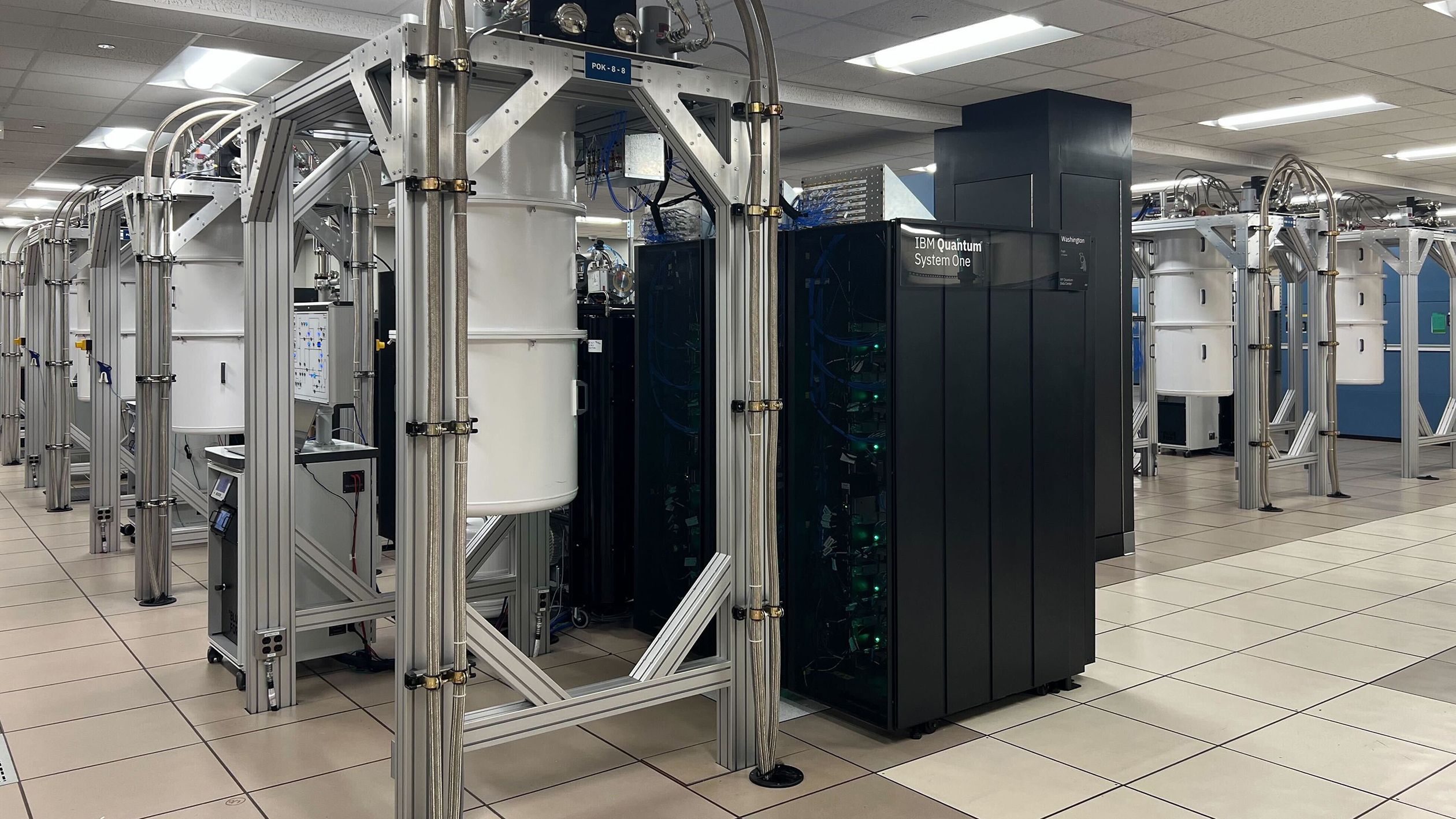
The comparison spans neutral atoms, trapped ions and superconducting systems, covering both gate-model machines and annealers. Room-temperature platforms avoid the cryogenic plant required by superconducting processors, while annealers address different workloads from general-purpose gate-model systems. The article assesses facility demands, current HPC deployments and published milestones toward logical qubits; it excludes software, control-electronics and cloud-aggregation companies.
Centres can own a processor, host one operated by a vendor, or provide remote access to a vendor-hosted machine. The best fit depends on the intended users, available facilities, staffing, access terms and integration with workload managers and GPU systems—not just a vendor’s specification sheet.
QuEra’s neutral-atom Gemini, a 260-qubit gate-model system, is installed at Japan’s AIST beside the ABCI-Q GPU supercomputer. It operates at room temperature and has published fidelities of 99.9 percent for single-qubit gates and 99.2 percent for two-qubit gates. QuEra’s Libra system, targeting 256 logical qubits and about a million reliable operations, is planned for Amazon Braket in 2028. The company has also announced an on-premises integration path through HPE Cray environments.
IQM has systems operating at the Leibniz Supercomputing Centre and Oak Ridge National Laboratory. Its superconducting machines require dilution refrigerators; its LUMI-IQ agreement with Finland’s CSC sets out a staged route from a 150-qubit system in 2027 to an upgrade capable of logical-qubit operations in 2029, with up to nine logical qubits. Fujitsu’s 256-qubit superconducting system is part of AIST’s ABCI-Q hybrid facility, and the company targets a 1,000-qubit machine for fiscal 2026. Its access is primarily through collaborative research.




Comments (0)
No comments yet. Be the first!