
The 120-meter tall system relies on launch tower-mounted mechanical arms, nicknamed "chopsticks," to secure the hardware mid-flight. Musk acknowledged the high stakes of the upcoming flight, stating that success remains probable but not guaranteed. Should the initial attempt falter, the company maintains a robust testing cadence with additional flight windows scheduled through the end of the year.
SpaceX to Attempt Mid-Air Catch of Starship Booster Next Month
SpaceX plans to attempt the first-ever recovery of its entire orbital launch system next month by catching both the Starship spacecraft and its Super Heavy booster mid-air. Elon Musk confirmed the aggressive timeline during a third-quarter earnings report, aiming to finalize the reuse technology that defines the vehicle’s design.
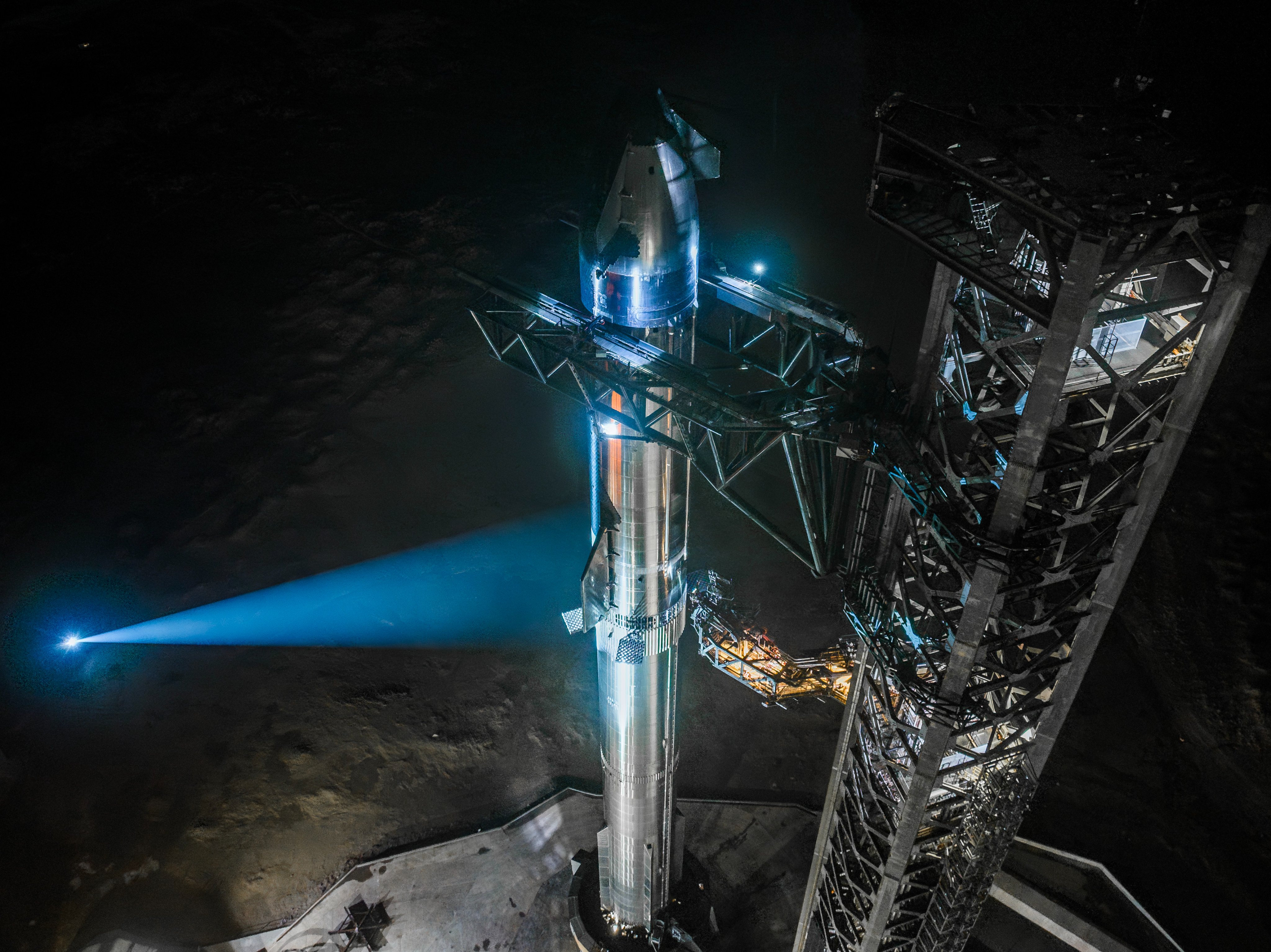
Recent progress underscores the technical hurdles remaining for the program. During the most recent launch, the system successfully reached orbit and deployed V3 Starlink satellites, though an engine shutdown forced mission control to truncate the flight from six orbits to two. While the Super Heavy booster and the Starship upper stage both executed controlled descents into the Gulf of Mexico and the Pacific Ocean respectively, they were not retrieved. The upcoming attempt represents a pivot from ocean splashdowns to the high-precision recovery required for rapid reusability.



Comments (0)
No comments yet. Be the first!